
Garage Door Maintenance Tips
Topic Overview
- How Do I Do Garage Door Maintenance on My Garage Door?
- Why Garage Door Maintenance Matters
- Garage Door Maintenance You Can Do Yourself
- Wash the Door
- Perform a Visual Inspection
- Lubricate Moving Parts
- Test the Door Balance
- Check Your Safety Features
- Inspect Weather Seals
- Test Your Garage Door Controls
- What Problems Can Routine Garage Door Maintenance Prevent?
- Garage Door Maintenance Myths We Hear All the Time
- Which Garage Door Parts Should You Never Service Yourself?
- Which Garage Door Issues Need To Be Professionally Serviced?
- How much does a garage door tune-up cost in 2026?
- Garage Door Repair Cost in 2026
- Maintenance Checklist - DIY vs Professional Help
- Keep Your Garage Door Running for Years
How Do I Do Garage Door Maintenance on My Garage Door?
BrochureFind a Garage Door Technician
Your garage door is the largest moving object in your home, yet it's one of the most overlooked when it comes to routine maintenance. Many homeowners don't think about it until it won't open on a rainy morning, gets stuck halfway before a vacation, or suddenly starts making loud grinding noises.
The good news is that most routine garage door maintenance is simple enough for homeowners to perform themselves. A little preventive care can help your door operate more quietly, reduce wear on expensive components, and even extend the life of your garage door by years.
At Hörmann, we've been designing and manufacturing garage doors for more than 90 years. Today, we're Europe's leading supplier of residential garage doors, commercial doors and high speed doors, with more than 6,000 employees across 40 specialized manufacturing facilities in Europe, North America, and Asia. We've seen firsthand how regular maintenance helps homeowners avoid costly repairs and how neglecting it often leads to preventable breakdowns.
Here's what you can safely do yourself, what should always be left to a professional, and how to know the difference.
Why Garage Door Maintenance Matters
Many homeowners assume that if their garage door still opens and closes, everything must be fine.
Unfortunately, that's not how garage doors work.
Most major failures happen because of wear that builds up over months or years. Springs lose lubrication, cables begin to fray, rollers wear down, and openers gradually work harder than they should. By the time you notice something is wrong, a small maintenance issue has often turned into an expensive repair.
Think of your garage door like your car. You wouldn't skip every oil change and expect your engine to last forever. Garage doors work the same way. Preventive maintenance costs very little compared to replacing broken parts or buying an entirely new door.
A properly maintained garage door can often provide reliable service for 20 to 30 years. One that's ignored may require major repairs or replacement in as little as 10 to 12 years.
Garage Door Maintenance You Can Do Yourself
Wash the Door
Your garage door is exposed to rain, road salt, pollen, dirt, and other contaminants every day.
Wash the door periodically using mild soap and water and a soft sponge or chamois cloth to remove buildup. While you're cleaning, inspect the paint for chips, scratches, or signs of corrosion that may need attention. Do not use a power washer on your garage door.
Why shouldn't you use a pressure washer to clean your garage door?
Using a pressure washer to clean a garage door is risky because the high PSI can can strip paint, force water behind seals, dent thin steel, tear away top layers of soft wood, or cause water seepage. These issues can lead to rust, wood rot, or potential electrical issues with the opener sensors.
Perform a Visual Inspection
One of the most valuable maintenance tasks doesn't require any tools at all.
Look over the entire garage door system and watch for:
- Bent tracks
- Frayed lift cables
- Rust forming on hardware
- Worn, damaged, or hardened/non-pliable weather seals
- Loose hinges or fasteners
- Signs of unusual wear
Catching these problems early can prevent much larger repairs later.
Lubricate Moving Parts
Proper lubrication is one of the easiest and most important maintenance tasks.
Lubricate:
- Hinges
- Roller bearings
- Springs
- Locks
- Arm bars
What is the best garage door spray lubricant?
Use a silicone-based or white lithium garage door lubricant specifically designed for garage doors. Silicone lubricants are an excellent choice because they repel dust and continue performing through changing temperatures.
White lithium grease works especially well on heavy-duty metal-on-metal applications such as chains and steel rollers, although it tends to attract more dirt over time and can degrade nylon rollers.
The best silicone-based garage door sprays are:
- Blaster Premium Silicone Garage Door Lubricant
- 3-IN-ONE Garage Door Lubricant
- CRC Heavy Duty Silicone Lubricant (for extreme weather)
The best white lithium greases for a garage door are:
Avoid using:
- Regular WD-40
- Household oils
- Thick grease
This surprises many homeowners, but standard WD-40 isn't actually a long-term lubricant, it's primarily a cleaner and degreaser. It dries quickly, leaves behind residue that attracts dirt, and won't provide the lasting protection your garage door components need.
Before lubricating, wipe away dirt and old residue with a clean rag. Afterward, cycle the door several times to distribute the lubricant evenly.
One important exception:
Never lubricate the tracks.
The rollers are designed to roll, not slide. Lubricating the tracks can actually cause the wheels to slip and collect additional dirt and debris.
How often should garage door parts be lubricated?
You should lubricate your garage door every 6 months for a door that's used every day. Why? because that's about how long the lubricants are meant to last at peak performance.
Test the Door Balance
A properly balanced garage door places less strain on your opener.
With the door closed, disconnect the garage door opener and manually lift the door to about halfway open.
If the door stays in place, the balance is likely correct.
If it falls closed, rises on its own, or feels excessively heavy the springs need professional adjustment or replacement.
This is not a repair homeowners should attempt.
Check Your Safety Features
Test the automatic reverse system
Your garage door's automatic reverse system is one of its most important safety features.
Test the system according to your owner's manual to verify it reverses properly.
Inspect the photo-eye sensors.
Make sure they're:
- Clean
- Properly aligned
- Free of dirt and debris
Here's a real example from our experience.
One homeowner experienced completely random garage door problems. The sensors were clean and properly aligned, yet the door occasionally refused to close.
The culprit?
A spider had built a web just above one photo eye. Every so often, the spider wandered in front of the beam, causing the opener to think something was blocking the doorway.
Sometimes the simplest maintenance check solves the most frustrating problem.
Inspect Weather Seals
Check both the bottom seal and the perimeter weather stripping for:
- Cracks
- Gaps
- Brittleness
- Hardened / non-pliable
- Missing sections
Replacing worn weather seals is one of the most affordable improvements you can make.
Good seals help keep out:
- Water
- Wind
- Dust
- Insects
- Extreme temperatures
They also improve comfort and energy efficiency throughout the year.
Test Your Garage Door Controls
Every 6 months test your:
- Wall control
- Remote controls
- Wireless keypad
- Backup battery (if equipped)
Surprisingly, one of the most common service issues is nothing more than a dead remote battery.
Testing these components regularly can save both frustration and an unnecessary service appointment.
What Problems Can Routine Garage Door Maintenance Prevent?
Over decades in the garage door industry, we've seen many expensive repairs that started as simple maintenance issues.
- Broken Springs
One of the biggest is broken springs. Keeping torsion springs properly lubricated reduces friction that can cause them to wear and break prematurely. - Frayed/Snapped Cables
Routine inspections also help identify frayed lift cables before they snap unexpectedly. - Motor Failure
Proper door balance prevents unnecessary strain on your opener, helping avoid premature motor failure. - Door Falling Off Tracks or Jammed
Keeping tracks clean and properly aligned reduces the chance of rollers jumping the track or becoming jammed. - Random Reversing / Not staying Closed
Cleaning photo-eye sensors helps prevent doors from randomly reversing or refusing to close.
Garage Door Maintenance Myths We Hear All the Time
"I'll just watch a YouTube video."
The internet contains thousands of garage door repair videos.
Some are excellent.
Others encourage homeowners to perform dangerous repairs involving springs, cables, and other tension-loaded components.
Just because someone demonstrates a repair online doesn't mean it's safe.
Garage door springs store tremendous amounts of energy. Improper repairs can cause serious injury or even death.
It's simply not worth the risk.
Professional service is often much more affordable than homeowners expect, and far safer.
"I'll just lubricate it when it starts squeaking."
Waiting for noise means waiting until unnecessary wear has already occurred.
Lubrication isn't meant to fix problems.
It's meant to prevent them.
Even a quiet garage door benefits from regular lubrication every few months.
Which Garage Door Parts Should You Never Service Yourself?
Some garage door maintenance should always be left to trained professionals.
Never attempt to repair or adjust:
- Torsion springs
- Extension springs
- Lift cables
- Bottom brackets
- Any tension-loaded components
One especially important warning:
Don't touch the red screws (if you have any) on your bottom brackets.
They're red for a reason.
Those brackets are connected to high-tension lift cables and should never be removed by a homeowner.
The specialized tools and training required for these repairs exist for your safety.
Which Garage Door Issues Need To Be Professionally Serviced?
Stop troubleshooting and contact a qualified garage door technician if:
- Your door is crooked or off the tracks.
- The door won't stay open or closed.
- Grinding or scraping continues after lubrication.
- Your opener strains, hums, or won't lift the door.
- A spring has broken.
- Lift cables appear frayed or loose.
- The door was struck by a vehicle.
- The door shakes or moves unevenly.
- Any repair involves the bottom brackets or other tension-loaded hardware.
Attempting these repairs yourself can turn a manageable repair into a dangerous situation. Hiring a professional can also help you prevent some very costly mistakes. To learn more check out our post on 5 Costly Mistakes a Garage Door Repair Professional Helps You Avoid.
How much does a garage door tune-up cost in 2026?
Basic Tune-up and Safety checks typically cost between $100 to $250 depending on the region and services provided.
Basic tune-ups usually include the following services:
- Lubrication of all moving parts (rollers, hinges, springs, and tracks).
- Tightening of loose hardware, bolts, and screws.
- Safety & Balance Testing of the auto-reverse, sensors, and door weight.
Garage Door Repair Cost in 2026
Garage door repairs cost between $100 and $900 on average in 2026.
Pricing varies depending on the region you live, replacement parts, and materials needed for the fix.
Basic Repairs
A basic repair involving only a single component averages between $100 and $300.
Comprehensive Repair
A comprehensive garage door repair with multiple component replacements and services averages between $370 and $1,200. Of course, pricing can be much higher depending on your region and the type of door you have.
Pro Tip:
Save money on labor for a two-spring garage door fix by replacing both springs in the same service call. If a spring breaks, the second one will typically fail soon afterwords and the price to fix both vs just one is nominal compared to a second service call.
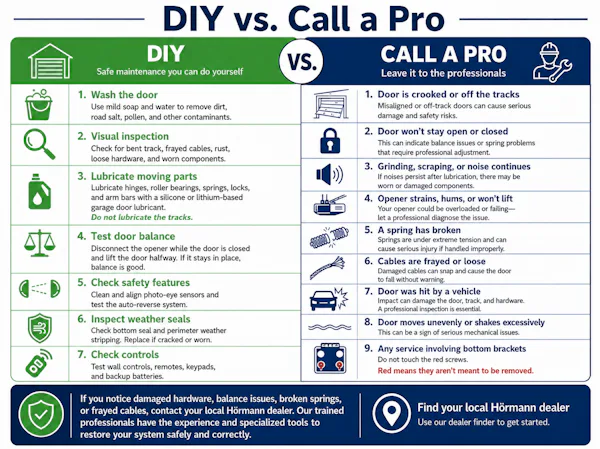
Maintenance Checklist - DIY vs Professional Help
Keep Your Garage Door Running for Years
Routine garage door maintenance doesn't take much time, but it pays off in quieter operation, fewer unexpected breakdowns, improved safety, and a longer-lasting garage door system.
A few simple tasks: cleaning, inspecting, lubricating, and testing safety features, can prevent many of the most common problems homeowners experience.
If you notice damaged hardware, balance issues, broken springs, or frayed cables, contact your local Hörmann dealer. Our trained professionals have the experience and specialized tools to restore your system safely and correctly.
Use our Dealer Finder to locate an authorized Hörmann dealer near you and keep your garage door operating safely and reliably for years to come.
