
5 Costly Mistakes a Garage Door Repair Professional Helps You Avoid
Topic Overview
- 1. Accidentally Voiding Your Garage Door Warranty
- 2. Attempting a Dangerous Garage Door Spring Repair
- 3. Creating Property Damage or Liability Problems
- 4. Treating the Symptom Instead of the Real Problem
- 5. Choosing the Lowest Price Instead of the Best-Qualified Company
- Ready for a Safe Upgrade? Protect Your Home Investment
- Frequently Asked Questions About Garage Door Repairs
Hiring a qualified garage door professional helps homeowners avoid five costly mistakes: voiding the warranty, attempting a dangerous repair, creating unnecessary liability, misdiagnosing the problem, and choosing poor workmanship based only on price.
A garage door may look straightforward from the outside, but it is a heavy mechanical system made up of springs, lift cables, rollers, tracks, hinges, brackets, and electrical components. When one part begins to fail, the consequences can range from premature wear to serious injury.
Some basic maintenance can be performed by a homeowner. However, work involving springs, cables, bottom brackets, door balance, structural components, or electrical troubleshooting should be handled by a trained garage door technician.
1. Accidentally Voiding Your Garage Door Warranty
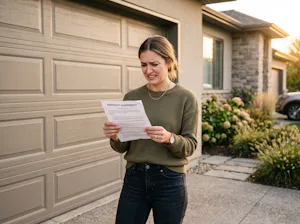
One of the easiest mistakes to make is modifying a garage door without first checking the manufacturer’s warranty and care instructions.
Homeowners may assume they can paint the door, install decorative hardware, add insulation, or replace components without affecting the warranty. However, garage doors that look similar can have very different materials, finishes, weight limits, and manufacturer requirements.
We encountered a homeowner who hired a third-party painter to paint her house and garage door. Painting the door seemed like a harmless cosmetic improvement. Unfortunately, that particular garage door was not designed to have paint applied to it. By painting the door, the homeowner voided the manufacturer’s warranty. The painter may have completed the work exactly as requested, but a garage door professional would have known to check the door model, surface material, factory finish, and warranty requirements first.
Why Manufacturer Knowledge Matters
A modification can affect more than the appearance of the garage door. Paint, decorative hardware, insulation, or incompatible replacement parts may change its weight, balance, finish, or operation.
Before altering a door, a qualified professional can determine whether the garage door is designed to be painted, which coatings and cleaning products are approved, whether decorative hardware can be safely added, and whether replacement parts are compatible. A professional can also identify whether a modification could affect the door’s balance or void the manufacturer’s warranty.
The mistake is not simply painting a garage door. It is modifying a specialized product without understanding the consequences.
Before painting, drilling, attaching accessories, or replacing parts, review the written warranty or speak with an authorized garage door dealer.
2. Attempting a Dangerous Garage Door Spring Repair
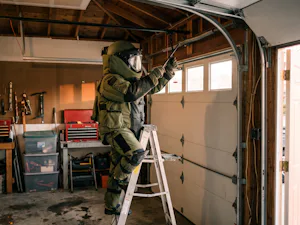
The most dangerous garage door mistake is attempting to repair a component that is under spring tension.
Garage door springs counterbalance the weight of the door. They store enough mechanical energy to help raise a door that may weigh hundreds of pounds. If that stored energy is released unexpectedly, a tool can be thrown, a cable can whip through the air, a bracket can move violently, or the entire door can fall. Torsion springs, extension springs, lift cables, cable drums, bottom brackets, spring anchor brackets, and related fasteners may all be connected to a tensioned system.
Even experienced garage door professionals have been severely injured while working around spring tension. Technicians have lost fingers, been struck by released components, and suffered other serious injuries. That should demonstrate how dangerous this type of repair can be for a homeowner or general handyman without the right training, tools, and procedures.
Red Hardware Is a Warning
Many garage door systems use red fasteners, labels, or painted components to identify hardware that should not be removed by an untrained person. Bottom brackets are a common example. They may look like ordinary brackets, but they can be directly connected to lift cables that are under spring tension.
Do not loosen or remove red screws, red bolts, springs, lift cables, cable drums, or bottom brackets. Red generally means the component is not intended to be removed during routine homeowner maintenance.
The Garage Door Opener Does Not Hold Up the Door
Another common misconception is that the electric opener supports the garage door’s weight.
It does not.
The spring system counterbalances the door. The opener is designed to move a properly balanced door through its normal travel.
If a spring breaks or the door becomes unbalanced, the opener may strain, hum, fail to lift the door, or damage the top section. The door may also become extremely heavy or fall unexpectedly. Hiring a professional helps homeowners avoid treating a high-tension mechanical system like an ordinary household repair.
3. Creating Property Damage or Liability Problems

Improper garage door work can create risks beyond the cost of repairing the door.
A poorly installed, damaged, or unbalanced garage door may fall without warning. That could damage a vehicle, tools, storage, flooring, or other property inside the garage. More importantly, it could seriously injure or kill someone nearby.
There is also potential liability involved in hiring an unlicensed or uninsured person. If that individual damages the home or is injured while performing the work, the homeowner may have fewer protections than expected. The specific legal and financial consequences depend on state law, the working relationship, and the homeowner’s insurance policy.
Questions may arise about who is responsible for property damage, who pays medical expenses, whether lost wages can be claimed, or whether the worker was properly classified as an independent contractor.
Liability may also become an issue if the homeowner knew about a hazard, failed to warn the worker, or supplied tools that failed during the repair. These rules vary by state and policy, so homeowners should not assume their insurance will automatically cover every situation.
Verify Credentials Before Work Begins
Before hiring someone to service or install a garage door, ask for proof of the credentials required in your area.
Depending on the state and type of work, those credentials may include:
- An active contractor license or registration,
- General liability insurance
- Workers’ compensation insurance
- A contractor bond
- Garage-door-specific training
- Written labor and product warranties.
Do not rely only on a business card, vehicle logo, advertisement, or verbal promise. Verify the company’s status through the appropriate state licensing or contractor-registration agency.
A properly licensed, bonded, and insured company may not provide the cheapest estimate. However, those protections are part of what the homeowner is paying for. They help protect the property owner, the technician, and everyone else near the work area.
4. Treating the Symptom Instead of the Real Problem
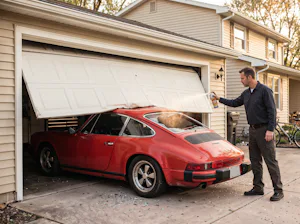
A squeaking garage door is a good example of why specialized experience matters. A homeowner or handyman may hear the noise and assume the door simply needs lubricant. Sometimes lubrication does solve the problem. When the noise continues, however, repeatedly spraying lubricant may only mask the symptom.
A noisy garage door could be caused by worn rollers, damaged rollers, loose hinges, misaligned tracks, worn bearings, an unbalanced door, opener strain, or friction involving the torsion spring system.
Some of these issues are relatively minor. Others can become dangerous if they are ignored or serviced incorrectly.
A Professional Evaluates the Entire System
A trained garage door technician does not only listen for the squeak. The technician evaluates how the entire system is operating. They check whether the door rises evenly, whether one side moves faster than the other, whether the rollers and hinges are worn, whether the tracks are properly aligned, and whether the opener is straining. They also evaluate the door’s balance, identify where the noise is coming from, and determine whether the door is safe to continue operating.
Years of experience working specifically with garage doors help a technician distinguish a basic maintenance issue from an early warning sign. Lubricant should not be used as a substitute for diagnosis. It should also not be sprayed indiscriminately on every garage door component.
The mistake a professional helps you avoid is assuming that the most obvious explanation is always the correct one.
5. Choosing the Lowest Price Instead of the Best-Qualified Company
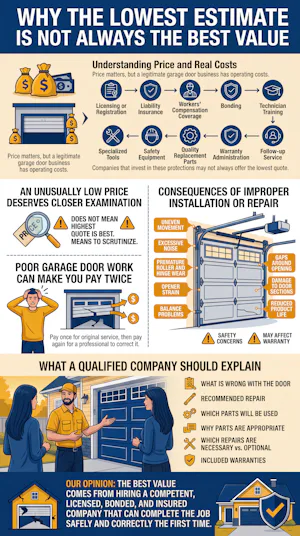
Price matters, and homeowners should understand exactly what they are paying for.
However, choosing a garage door company based only on the lowest estimate can become an expensive mistake. A legitimate garage door business must account for the real costs of operating safely and responsibly. Those costs include licensing or registration, liability insurance, workers’ compensation coverage, bonding, technician training, specialized tools, safety equipment, quality replacement parts, warranty administration, and follow-up service.
A company that invests in these protections may not always offer the lowest quote. That doesn't mean the highest quote is automatically the best. It means an unusually low price deserves closer examination.
Poor Garage Door Work Can Make You Pay Twice
Low-quality work may leave a homeowner paying once for the original service and again for a qualified professional to correct it.
Improper installation or repair can cause uneven movement, excessive noise, premature roller and hinge wear, opener strain, balance problems, gaps around the opening, damage to door sections, and reduced product life. It may also create safety concerns or affect the garage door warranty.
A qualified garage door company should clearly explain what is wrong with the door, what repair is being recommended, which parts will be used, and why those parts are appropriate. The company should also explain which repairs are necessary, which recommendations are optional, and what warranties are included.
In our opinion, the best value usually comes from hiring a competent, licensed, bonded, and insured company that can complete the job safely and correctly the first time.
How Do You Choose a Qualified Garage Door Professional?
Before hiring a garage door company, do your homework.
Ask whether the company is licensed or registered where required, bonded, and insured. Confirm whether it carries workers’ compensation coverage and can provide proof of current insurance. You should also ask how much garage-door-specific experience the technicians have, whether they use compatible or manufacturer-approved parts, and whether the repair could affect the warranty.
Request a written estimate and make sure you understand the labor and product warranties. You should also know who to contact if there is a problem after the repair.
Online reviews can be helpful, but they should not replace credential verification. Look for reviews that explain what service was performed, whether the technician communicated clearly, whether the final price matched the estimate, and whether the company handled follow-up concerns professionally.
When Should You Call a Garage Door Professional?
Stop using the door and contact a qualified professional when a torsion or extension spring is broken, a lift cable is loose or frayed, or the garage door is crooked or off its tracks. Professional service is also needed when the door will not stay open or closed, moves unevenly, shakes excessively, or feels unusually heavy.
Call a technician if the opener strains, hums, or cannot lift the door, or if grinding and scraping continue after basic maintenance.
A garage door that has been struck by a vehicle should also be inspected before it is used again. The same applies when a bottom bracket appears loose or damaged or when you are unsure whether a repair could affect the warranty.
Keep people, pets, and vehicles away from a damaged garage door until it has been inspected. Do not attempt to release spring tension or remove springs, cables, drums, bottom brackets, or red fasteners.
Is Hiring a Garage Door Professional Worth It?
Hiring a garage door professional is worth it when the job involves safety, spring tension, door balance, structural components, electrical troubleshooting, warranty requirements, or an uncertain diagnosis.
A qualified technician brings more than tools. They bring product knowledge, specialized training, diagnostic experience, proper equipment, safety procedures, and insurance protection. Hiring a professional can help you avoid voiding the manufacturer’s warranty, suffering a serious injury, creating unnecessary liability, treating a symptom without fixing the cause, and paying twice for poor workmanship.
A garage door is not just another household appliance. It is a heavy, tensioned mechanical system. Knowing when not to attempt a repair is one of the smartest decisions a homeowner can make.
If you want to save some money, there are still several maintenance procedures you can do yourself which are detailed in our garage door maintenance tips article.
Ready for a Safe Upgrade? Protect Your Home Investment
Don't risk your property value or family safety on an amateur installation. Use the official Hörmann Dealer Locator to connect with a licensed, bonded, and insured professional in your area who can provide accurate pricing, precision setup, and certified warranty protection.
Already Have a Professional System Installed?
If your door was already mounted by a professional and you want to ensure it stays in peak operational condition, structural longevity starts with smart upkeep. Read our comprehensive guide on Garage Door Maintenance Tips to learn how to check system balance, inspect weatherstripping, and properly clean your panels without damaging the factory finish.
Frequently Asked Questions About Garage Door Repairs
What Garage Door Repairs Should Homeowners Avoid?
Homeowners should avoid repairs involving torsion springs, extension springs, lift cables, cable drums, bottom brackets, door balance, and other components under tension.
These parts can release stored energy suddenly and cause severe injury.
Can Painting a Garage Door Void the Warranty?
Yes. Painting may void the warranty if the door or factory finish was not designed to accept paint.
Check the manufacturer’s written instructions or contact an authorized dealer before applying paint or another coating.
Why Are Garage Door Springs Dangerous?
Garage door springs store mechanical energy used to counterbalance the door.
If a spring or connected component is loosened incorrectly, that energy can be released suddenly, causing hardware to move violently or the door to fall.
Does the Garage Door Opener Hold Up the Door?
No. The spring system counterbalances the weight of the door.
The opener moves a properly balanced door. A broken spring or balance problem can overload the opener.
Is a Squeaking Garage Door Always a Lubrication Problem?
No. Squeaking may also be caused by worn rollers, loose hinges, misaligned tracks, damaged bearings, balance problems, or friction involving the spring system.
Why Should I Hire a Licensed and Insured Garage Door Company?
A properly qualified company provides greater protection if a worker is injured, property is damaged, or a repair is completed incorrectly.
Licensing and insurance requirements vary by state, so verify the company’s credentials before work begins.

